You Didn't Start Late. The Timeline Was Always a Lie.
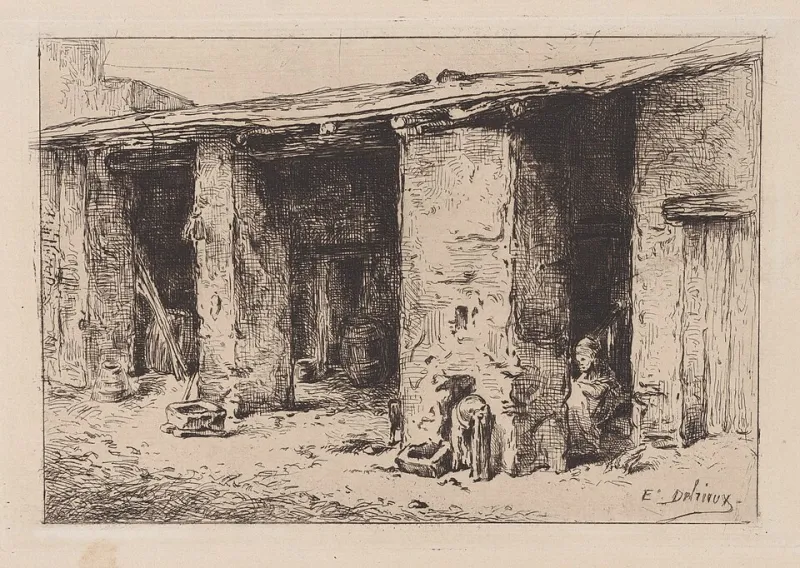
Photo: Creator:Etienne Delrieux, CC0, via Wikimedia Commons
Somewhere along the way, we collectively decided that creative success is a race — and that anyone who hasn't crossed certain finish lines by a certain age is already losing. Twenty-five and not published? You're behind. Thirty and still figuring out your voice? Better hurry up. Forty and just now starting to share your work publicly? Well, bless your heart.
This is one of the most corrosive myths in creative culture, and it deserves to be taken apart piece by piece.
The Overnight Success Story Is Mostly Fiction
We love a good origin story. The teenager who blew up on YouTube. The twenty-two-year-old who landed a book deal after one viral tweet. The artist who seemingly appeared out of nowhere, fully formed, radiating talent and timing.
What we don't talk about — because it's less cinematic — is everything that happened before the moment we noticed them. The years of practice. The failed projects. The day jobs. The pivots. The private notebooks full of work that never saw the light of day.
Take Vera Wang. She didn't design her first bridal gown until she was 40. Before that, she was a figure skater, then a fashion editor at Vogue for 16 years. Now she's one of the most recognizable names in fashion. Or consider Toni Morrison, who published her debut novel, The Bluest Eye, at 39 — after working as an editor and raising two kids largely on her own. She went on to win the Nobel Prize in Literature. These aren't anomalies. They're just the stories we forget to tell.
The myth of the overnight success survives because we only ever see the highlight reel. We see the arrival, never the road.
Why We Believe the Lie Anyway
Social media has made this worse, not better. Platforms reward novelty and momentum. Algorithms favor accounts that are growing fast, not necessarily accounts that are creating well. When you're watching someone else's meteoric rise in real time, it's almost impossible not to measure your own pace against theirs.
And then there's the cultural obsession with youth as a proxy for potential. In America especially, we have a deep, weird reverence for the prodigy — the kid who makes it before they're old enough to rent a car. It makes for a great story. It also makes everyone else feel like they've already missed their window.
But here's the thing: most of the creators who achieve lasting resonance — the ones whose work actually holds up, whose audiences stay, whose influence compounds over time — aren't the ones who launched the fastest. They're the ones who had something real to say.
What Experience Actually Gives You
There is no substitute for having lived. And I mean that in the most practical, unsexy, unglamorous way possible.
When you've worked jobs you hated, you know something about compromise. When you've loved people who left, you know something about grief that doesn't resolve neatly. When you've made decisions you regret, you know something about nuance. All of that — every single embarrassing, painful, confusing bit of it — is material. It's texture. It's the difference between work that feels technically competent and work that makes someone feel less alone at 2 a.m.
Younger creators are often extraordinary. Genuinely. But there's a kind of creative authority that only comes from accumulation — from having enough reference points to know what actually matters to you, separate from what you think is supposed to matter. That authority isn't available at 22. It just isn't. And that's not a criticism. It's just true.
Maturity gives you a longer view. It gives you the capacity to tolerate ambiguity, to sit with a project instead of rushing it, to let something be bad before it gets good without panicking. These are competitive advantages, not consolation prizes.
The Real Question Isn't When. It's Whether.
I want to be honest with you about something: the "late start" panic is often less about timing and more about fear. The timeline gives us a convenient excuse. If we're already behind, why bother starting? If the window has passed, we're off the hook.
But the window hasn't passed. There is no window. That's the whole point.
The question that actually matters isn't when you start. It's whether you start — and whether you keep going after the initial rush of beginning fades into the long, unglamorous middle of making something real.
Pensylvania-based poet Ross Gay didn't publish his first collection until his mid-thirties. He's now one of the most beloved writers in American literary culture. Chef Julia Child didn't appear on television until she was 51. Her career spanned decades after that. These people didn't succeed despite starting later. In many cases, the depth of their work is inseparable from the time they took to get there.
Stop Apologizing for Your Timeline
If you've internalized the idea that you're behind — that your creative life has already been compromised by the years you spent doing something else, or being someone else, or just trying to survive — I want you to hear this clearly: that framing is not helping you make better work. It's just making you feel bad.
Your previous career isn't a detour. Your late start isn't a liability. The decade you spent in a job you didn't love gave you something — even if that something is just the profound clarity of knowing exactly what you don't want to make.
Start now. Start messy. Start without the audience already in place or the platform already built or the credentials already earned. The timeline you've been measuring yourself against was invented by people who had something to sell — and it was never really about you.
Your pace is not your problem. Your pace might actually be your greatest asset. The work you make from a place of genuine readiness, hard-won perspective, and lived-in truth will always outlast the work that was rushed to meet someone else's deadline.
You're not late. You're right on time — which is to say, you're exactly where you are, and that's the only place the work can begin.