Your Public Self Is Not Your Whole Self — And That's Not a Problem

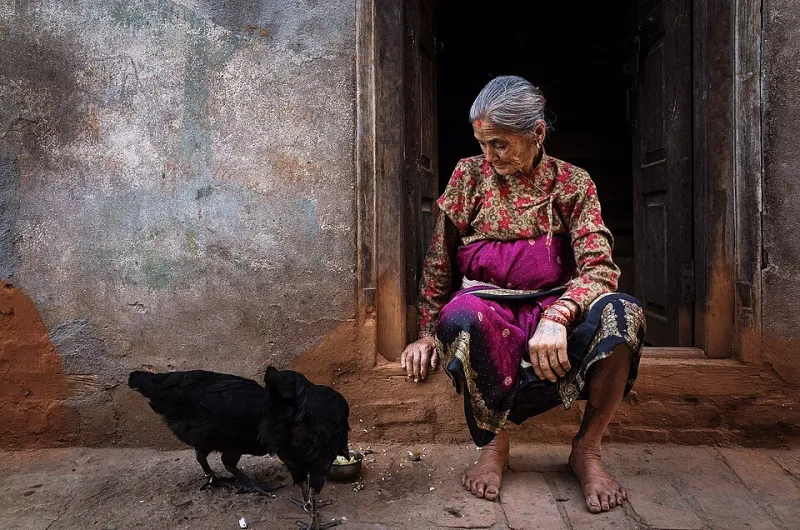
Photo by Photo by Brad Switzer on Unsplash on Unsplash
Somewhere along the way, the internet decided that the most virtuous thing a creator could do was be completely transparent. Show everything. Invite people in. Let them see the mess in your kitchen, the circles under your eyes, the unfiltered version of your Tuesday morning. The logic was noble enough — authenticity builds trust, and trust builds community.
But here's what nobody said out loud: you are allowed to have a life that doesn't belong to the internet. And not just allowed — you might actually need that separation to survive as a creative person long-term.
This isn't about performing a fake version of yourself for clicks. It's about something way more nuanced than that. It's about understanding that your public persona and your private self can exist simultaneously, serve different purposes, and both be completely legitimate — without one of them being a lie.
The Myth of Total Transparency
We've been sold this idea that any gap between who you are online and who you are in real life is inherently suspicious. That compartmentalization means you're hiding something. That if your audience really knew you, they'd feel deceived.
But think about how you actually move through the world. You don't talk to your boss the way you talk to your best friend. You don't show up to Thanksgiving dinner the same way you show up to a first date. You are, at any given moment, a layered human being who adapts to context — and none of those versions of you are fake. They're all you. Just different facets, held up to different light.
The creative world has somehow decided that this totally normal human behavior becomes a moral failing the moment you have an audience. And that's worth pushing back on.
What You're Actually Protecting When You Draw That Line
Here's the thing about keeping parts of your life private: it's not just about protecting yourself from internet strangers. It's about protecting the source.
The experiences that feel most sacred to you — your relationships, your grief, the weird quiet moments that don't photograph well — those are often the exact things that fuel your best work. Not because you share them, but because you lived them fully, without an audience watching. When you turn every moment into content, you stop being someone who has experiences and start being someone who documents them. And those two things feel radically different from the inside.
Some of the most compelling creators I've watched over the years aren't the ones who share everything. They're the ones who clearly have a rich interior life that only surfaces in their work. You can feel it. There's a depth there that can't be manufactured by oversharing — it comes from actually living.
The Counterintuitive Math of Creative Longevity
If you've been creating publicly for any significant amount of time, you've probably felt it: the slow erosion that happens when your life and your content become the same thing. Every experience gets filtered through the question of can I use this? Every emotion becomes a potential caption. Every hard conversation is quietly assessed for its story potential.
That's exhausting. And more importantly, it's creatively limiting.
When you protect certain parts of your life from public consumption, you give yourself something invaluable: unmonetized experience. Moments that exist just for you, that don't need to perform or convert or resonate with anyone. Those moments are where you actually rest — not just physically, but creatively. They're where your subconscious does its best work, synthesizing everything you've absorbed and turning it into something new.
The separation isn't a gap in your authenticity. It's where your authenticity gets made.
How to Actually Hold the Line Without Feeling Like a Fraud
So what does this look like practically, when the pressure to share is constant and your audience has come to expect a certain level of access?
Start by getting clear on what's genuinely yours. Not what feels risky to share, but what feels sacred. Your relationship with your partner. Your family dynamics. Your faith or lack thereof. Your mental health journey in real time. Whatever it is — if it feels like sharing it would cost you something irreplaceable, that's a signal worth listening to.
Redirect, don't deflect. You don't owe anyone an explanation for your boundaries, but you also don't have to be cold about it. You can acknowledge that something is personal without making it a whole thing. "That's not something I share publicly" is a complete sentence. So is changing the subject with warmth.
Let your work speak for what you can't. This is the move that great artists have always made. You don't have to explain your grief if you can write about loss in a way that makes people feel less alone in theirs. You don't have to document your healing if the work you make from that healing says everything that needs to be said. The art can hold what you're not ready to.
Give your audience something real without giving them everything. Transparency exists on a spectrum. You can be genuine about your creative process, your struggles with the work itself, your professional evolution — without opening the door to every corner of your personal life. That's not a bait-and-switch. That's discernment.
The Audience You're Building Doesn't Need All of You
Here's the reframe that changed everything for me: your audience doesn't actually want all of you. What they want is to feel something. To be moved, challenged, entertained, seen. They want the work to do something to them.
You are the conduit for that — but you are not the product. And when you start treating yourself like the product, offering up more and more of your actual life to feed the machine, you eventually run out of self to give. That's not a creative block. That's a depletion of the source material.
The most sustainable version of a creative career is one where the audience gets your perspective — your voice, your vision, your point of view on the world — without getting unrestricted access to your personhood. Those are different things. And honoring that difference isn't dishonest. It's how you last.
Your public self and your private self don't have to match. They don't have to be in conflict, either. They can simply coexist — one facing outward, one held close — and both of them can be completely, unapologetically real.