The More You Post, the More Alone You Feel: The Hidden Cost of Constant Output
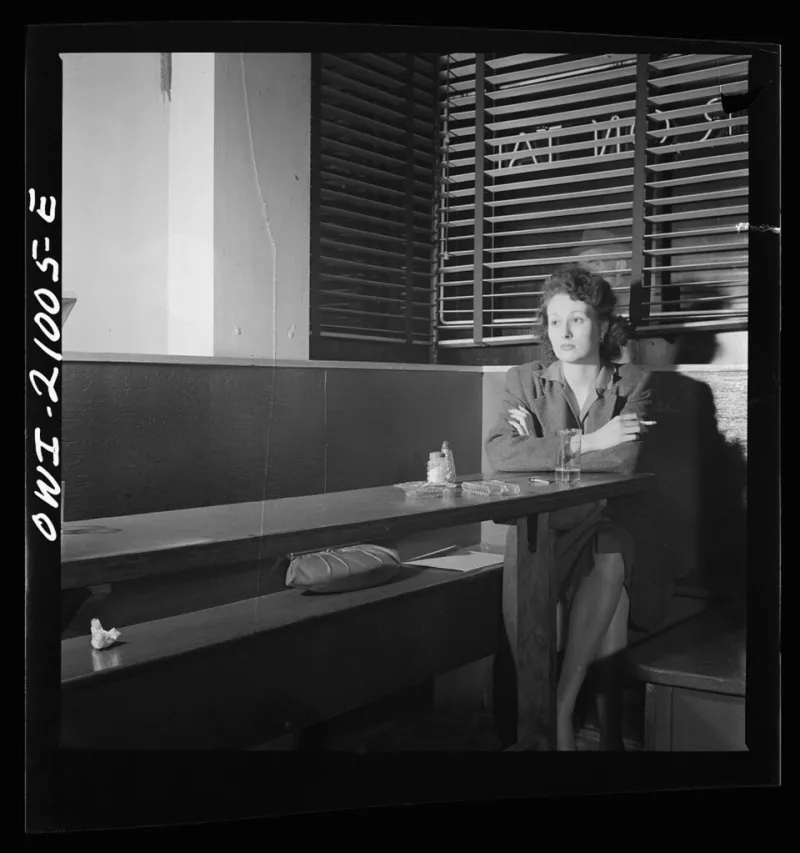
Photo: Esther Bubley, Public domain, via Wikimedia Commons
Somewhere between your third piece of content this week and the algorithm's quiet demand for a fourth, something slips. It's not your work ethic. It's not your passion. It's the text you forgot to respond to. The dinner you rescheduled. The friend who stopped inviting you because they figured you'd be busy anyway.
You are visible to thousands of people and somehow, inexplicably, lonelier than you've ever been.
This is the paradox that doesn't get talked about in creator economy spaces, because talking about it doesn't convert. It doesn't sell a course. It doesn't make for a clean carousel post. But it's real, and it's happening to more creators than anyone is willing to admit out loud.
The Machine That Never Sleeps (And What It Costs You)
The pressure to be prolific isn't imaginary. Platforms reward frequency. Audiences expect consistency. Brand deals often hinge on whether your posting cadence looks "healthy" to a media buyer in a conference room somewhere. The economic incentives of the creator economy are structurally designed to keep you producing, and producing, and producing.
But here's what that structure doesn't account for: human beings are not content factories. We are relational creatures. We are wired for reciprocity, for shared meals and unscheduled phone calls and the kind of conversation that doesn't have a hook or a call to action. When the majority of your social energy is funneled into broadcast mode — talking at an audience rather than with people you actually know — something fundamental starts to atrophy.
You get good at performing connection. You get worse at having it.
Why Visibility and Belonging Are Not the Same Thing
There is a version of "community" that the creator economy sells you, and it looks like engagement metrics and comment sections and DMs from strangers who feel like they know you. And look — that stuff isn't nothing. Genuine connection can happen in those spaces. But it is not a substitute for the kind of belonging that requires your actual presence, your actual time, your actual vulnerability with people who have no audience stake in your success.
When you're always on, always producing, always shaping your life into content, you start to lose the thread of who you are when no one's watching. And the people in your real life — the ones who knew you before the following, or who love you entirely outside of it — can feel that absence even when you're physically in the room.
Being prolific can masquerade as connection. It has the social texture of it. You're putting yourself out there, you're getting responses, people are engaging with your ideas. But you can go weeks without a single conversation that wasn't, in some way, shaped by your public persona. That's not community. That's an audience. And audiences, by design, don't actually know you.
The Slow Erosion Nobody Notices Until It's Bad
This isn't a dramatic cliff-edge kind of problem. It's gradual. Friendships thin out because you keep deprioritizing them in favor of the next deadline, the next launch, the next piece of content that the algorithm is waiting on. The people who love you learn to expect less of your time. You tell yourself you'll reconnect when things slow down, but things don't slow down, because you've built a life where slowdown feels like failure.
And then one day you realize you haven't laughed — really laughed, the kind that makes your stomach hurt — in longer than you can remember. You realize you don't know what's going on in your best friend's life. You realize that you have thousands of followers and maybe three people you could call at 2 a.m. if things got bad.
That's the hidden cost of constant output. Not burnout, exactly. Something quieter and more corrosive than that.
What Sustainable Actually Looks Like
Sustainability in the creator space gets talked about almost exclusively in terms of workflow — batch your content, build systems, automate where you can. And sure, that stuff helps. But sustainable creative work is not just about protecting your output capacity. It's about protecting the life that makes your output worth anything.
Here's what that might actually look like in practice:
Treat your relationships like the non-negotiable they are. Block time for the people in your life the same way you block time for a client call or a recording session. Not when you have a free moment — you will never have a free moment. Proactively, deliberately, on the calendar.
Create things that aren't for anyone. Keep a journal no one reads. Make a playlist just for yourself. Cook a meal and don't photograph it. Reclaim the private interior life that constant content creation slowly colonizes. You need a self that isn't a brand, and that self requires maintenance.
Let yourself be a bad communicator sometimes. Not with everyone, not always — but stop trying to perform perfect responsiveness to your audience while your actual relationships run on fumes. Answer the text from your college roommate before you answer the DM from a follower.
Audit what you're actually getting from your output rhythm. If you're posting daily and it's working financially but you feel like a ghost inside your own life, that's important data. The creator economy will always want more from you. You get to decide how much more is actually available.
The Work Needs You to Have a Life
Here's the thing that the relentless-output gospel misses entirely: the richness of your creative work is directly proportional to the richness of your lived experience. The best stuff you'll ever make will come from real conversations, real heartbreak, real joy, real boredom, real time spent being a person in the world rather than a content generator in it.
You cannot pour from an empty cup — yes, that's a cliché, but it's a cliché because it's structurally true. And the cup that empties fastest isn't your energy or your ideas. It's your sense of being known, loved, and genuinely connected to other humans.
Being prolific is a professional asset. Being in real relationship with the people in your life is what makes you a person worth listening to.
You don't have to choose between a career and a life. But you do have to choose, repeatedly and deliberately, to protect the life. Because the machine will never stop asking for more. That boundary has to come from you.
And it turns out, that's the most creative act of all.