Whose Art Is It Anyway: How to Stop Letting Your Audience Run Your Creative Life

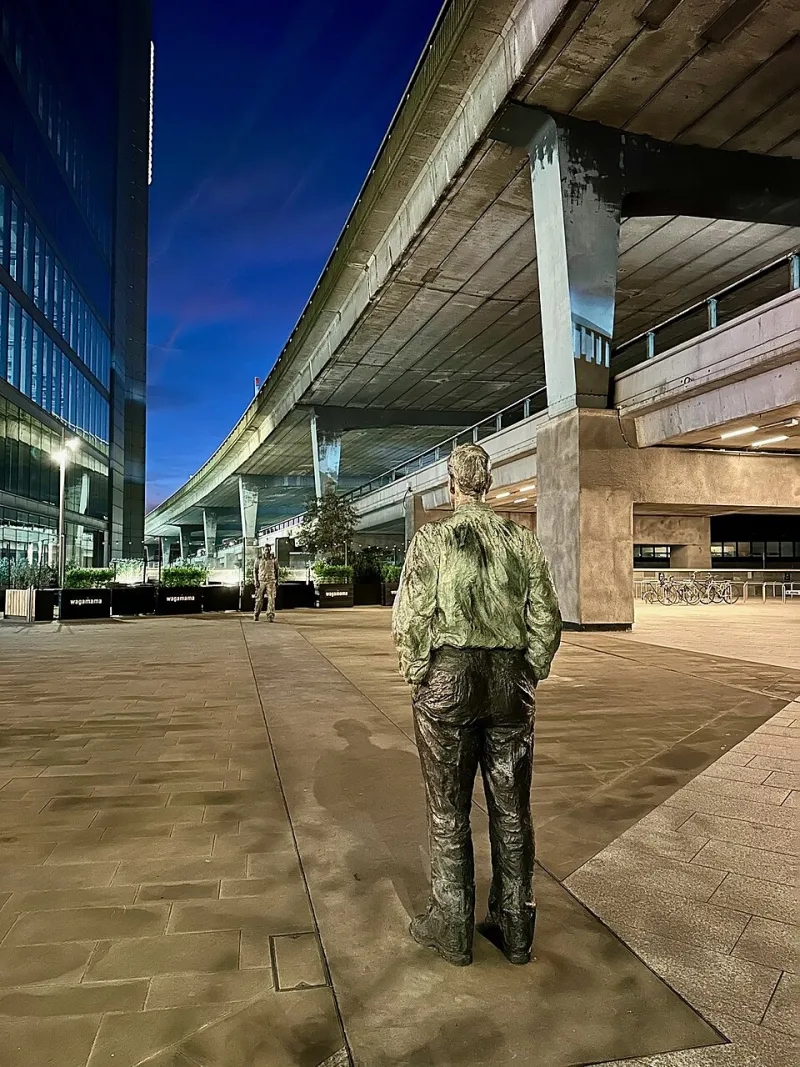
Photo: Tomas Castelazo, CC BY-SA 3.0, via Wikimedia Commons
It starts so reasonably.
You make something, your audience responds. You notice what they respond to. You make more of that. Engagement goes up, which feels like validation, which feels good, which reinforces the behavior. Before long, you're not making what you want to make — you're making what you've been conditioned to make, optimized for an approval loop that has nothing to do with your actual creative vision.
This is how your audience becomes your landlord. And like a lot of landlord situations, it's very hard to notice until you're already locked into a lease you didn't fully read.
The Gradual Handover
I want to name something that doesn't get said enough: this process feels like success while it's happening.
When your numbers go up, when the comments are glowing, when people are sharing your work and tagging their friends — that all feels like you're doing something right. And in some narrow sense, you are. You've figured out how to give people what they want. The problem is that "what people want" and "what you're here to make" are not always the same thing, and when you spend long enough optimizing for the former, you can lose track of the latter entirely.
The handover happens in increments. You drop the weird experimental piece because last time you did something like that, the engagement tanked. You lean harder into the format that performs. You start pre-editing your ideas in your head before you even make them, running them through an imaginary audience focus group. You stop making the thing that scares you because you already know how it'll land.
None of these feel like surrendering control. They feel like being strategic. But at a certain point, strategy becomes a costume for fear, and you have to be honest enough with yourself to tell the difference.
Warning Signs You've Crossed the Line
How do you know when you've gone from thoughtfully connecting with your audience to being quietly managed by them? A few patterns worth paying attention to:
You feel anxious before posting anything that deviates from your "formula." Not excited-nervous. Dread-nervous. The kind that makes you want to walk it back before anyone even sees it.
You've stopped making things in private. Everything you create goes through the filter of how will this land before it even gets to is this what I want to say.
Your creative decisions are primarily reactive. You're responding to what got comments, what got shared, what got criticized — rather than following a thread of genuine curiosity or vision.
You feel resentful of your audience. This one's a big signal. Resentment in creative work almost always points to a boundary that's been violated — and when you've handed over your autonomy, you're the one who did the violating.
You can't remember the last time you surprised yourself. When's the last time you made something and thought I didn't know I had that in me? If the answer is "I can't remember," that's worth sitting with.
Why This Isn't Just a Feelings Problem
I want to push back gently on the framing that this is purely an emotional issue — a matter of building confidence or caring less about what people think. Because it's also a structural one.
The creator economy is literally built around audience metrics. Sponsorships, platform algorithms, brand deals, speaking opportunities — they all flow toward creators who have demonstrated the ability to hold attention. That system creates a very real financial incentive to keep doing what works, to not rock the boat, to keep the engagement numbers stable.
So when I say reclaim your creative autonomy, I'm not being naive about the economics. I'm saying: the economics are real, and if you let them fully dictate your creative choices, you will eventually make work that feels hollow to you, which will make it hollow to your audience, which will undermine the very thing you were trying to protect.
The most sustainable creative businesses I've seen are built around a creator who has a genuine point of view — not one who's expertly mirrored their audience back at themselves. People can feel the difference, even when they can't name it.
The Art of the Strategic Disappointment
Okay, so you want to reclaim your creative direction. The fear is: what if people leave? What if you lose the audience you worked so hard to build?
Here's the reframe: you're not trying to disappoint your audience. You're trying to be honest with them. And there's a way to do that which actually deepens the relationship rather than destroying it.
Be transparent about the shift. If you're moving in a new direction, say so. You don't owe anyone a detailed justification, but a genuine "I'm following something new" lands very differently than just abruptly changing course with no acknowledgment.
Give people the chance to come with you. Some of them will surprise you. The followers who are there because they actually connect with you — not just the format you've been using — will follow you into new territory. The ones who leave were only ever renting a specific version of you, not investing in you as a creator.
Accept that some audience contraction is the cost of creative integrity. This one's uncomfortable but real. You may lose some followers. You may lose some engagement. You might even lose a brand deal or two. Weigh that against the cost of continuing to make work you don't believe in. That math is different for everyone, but it's worth doing honestly.
Building a Community, Not a Constituency
The long-term goal isn't to ignore your audience. It's to build a relationship with them that's collaborative rather than transactional — where they're along for the ride because they trust you, not because you've figured out exactly what they want and you're delivering it on schedule.
That kind of community is rarer and harder to build. It requires you to be genuinely yourself, which is terrifying, which is also the only thing that actually works over time.
Your audience is not your landlord. They're not your boss. At best, they're your people — the ones who showed up because something you made resonated with something real in them. Honor that by keeping making real things.
Even when it's risky. Especially when it's risky.
That's the whole point.