Stop Scrolling, Start Creating: How the Comparison Game Is Quietly Killing Your Art
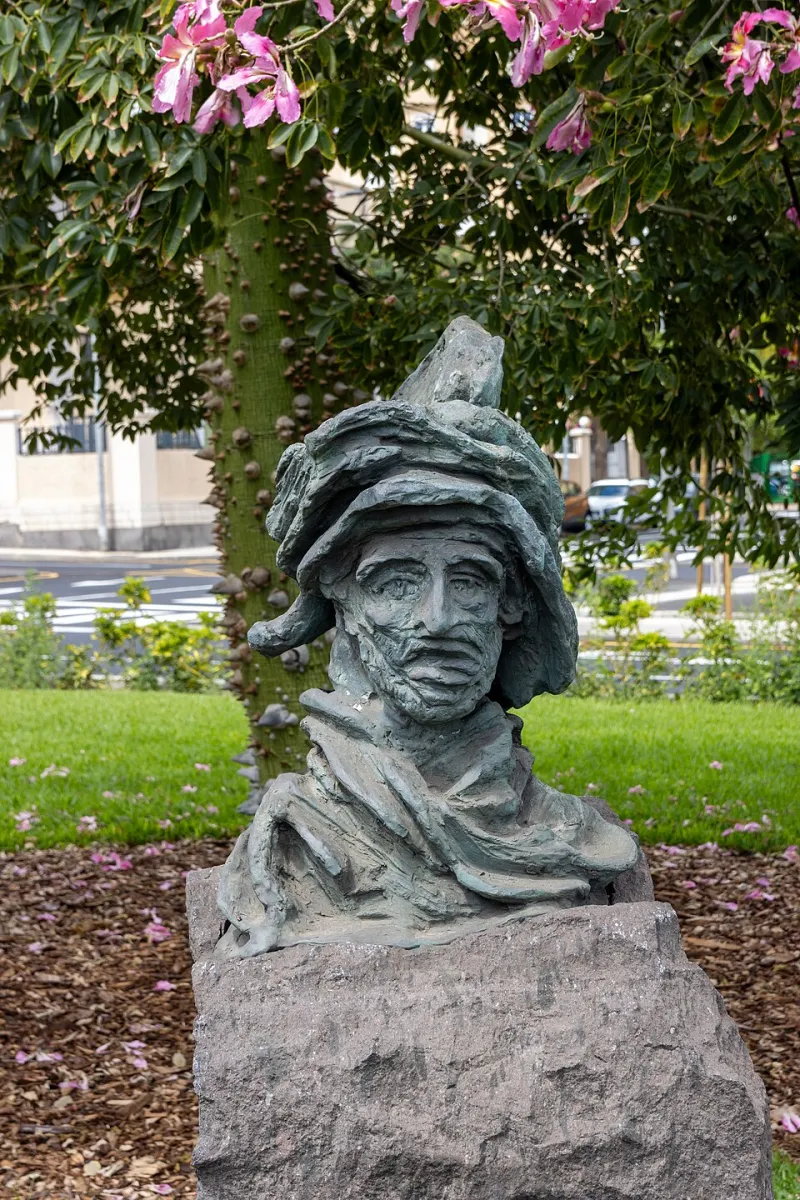
Photo: Photograph by Mike Peel (www.mikepeel.net)., CC BY-SA 4.0, via Wikimedia Commons
Let me paint you a picture. It's 7 a.m. You haven't even had coffee yet. You pick up your phone — just to check the time, you tell yourself — and within forty-five seconds you've seen three people announce book deals, two creators hit a million followers, and one artist whose work is so stunning it makes your chest hurt a little. By the time you actually get up to make that coffee, you've already decided, somewhere in the back of your brain, that your work isn't good enough.
Welcome to the comparison trap. Population: every single creative person alive in 2024.
I've been there more times than I can count. And I'm not talking about a fleeting moment of envy that passes like a cloud. I'm talking about the slow, grinding kind of self-doubt that builds up over weeks of passive consumption until you're sitting in front of a blank document wondering why you even bother.
The Science Behind Why This Hurts So Much
Here's the thing — the way comparison wrecks us isn't random. It's actually baked into how our brains work. Psychologist Leon Festinger coined the term social comparison theory back in 1954, arguing that humans have a fundamental drive to evaluate themselves relative to others. We've been doing this since we lived in small tribes where knowing your rank actually mattered for survival.
The problem? Our brains weren't designed to process the scale of comparison that social media demands. We're not comparing ourselves to the twenty people in our immediate community anymore. We're comparing ourselves to everyone — curated, filtered, highlight-reel everyone — simultaneously, all day long.
Research out of the University of Pennsylvania found that limiting social media use to about 30 minutes a day significantly reduced feelings of loneliness and depression in participants. Thirty minutes. Most of us are well past that before lunch.
And for creatives specifically, the damage runs deeper. Our work is personal. It's tied to our identity in a way that, say, a spreadsheet isn't. When we see someone else's creative output and measure it against our own, we're not just comparing skills — we're comparing worth.
The Highlight Reel Problem
Here's what no one posts about: the six months of rejection before the book deal. The three failed product launches before the one that went viral. The years of making work that nobody saw before the algorithm finally decided to care.
I spent a long time in my own creative career convinced that I was perpetually behind. Behind other writers, behind other creators, behind some imaginary version of myself that had it all figured out. What I was actually doing was comparing my entire messy, nonlinear, very human journey to the carefully curated wins of people who were just as messy and nonlinear as me — they just weren't posting about that part.
Social media is an awards show, not a documentary. You're seeing the acceptance speech, not the years of auditions.
How I Started Curating My Consumption
I'm not going to tell you to delete all your apps and move to a cabin in Vermont. That's not realistic, and honestly, community and inspiration are real things you can find online. But I did make some deliberate changes that shifted everything for me.
I unfollowed accounts that made me feel small. Not because those people did anything wrong, but because my nervous system was treating their success like a threat to mine. That's not their problem to solve. It's mine.
I started following accounts that showed the process, not just the product. Artists who share their sketchbooks, writers who post about the drafts that aren't working, creators who talk openly about the slow seasons. That kind of content actually feeds your creative energy instead of depleting it.
I instituted a no-phone morning. The first hour of my day belongs to me. No metrics, no announcements, no other people's wins or losses. Just coffee and whatever I'm working on. It sounds small. It changed my entire relationship with my work.
Reframing How You Measure Progress
One of the most radical things you can do as a creator is decide that you get to define what progress looks like for you.
Not your follower count. Not your peers' timelines. Not some external validator who gets to decide when you've officially made it.
I started keeping what I call a creative evidence journal — just a running list of things I made, finished, shipped, or tried. Not the outcomes. Just the acts of creation themselves. It's embarrassingly simple, and it works embarrassingly well. Because when you're in a comparison spiral, your brain is only showing you what you lack. The journal shows you what you've actually done.
Progress in creative work is rarely linear, and it almost never looks impressive from the outside until it suddenly does. The work you're doing right now — the stuff that feels slow and uncertain and not-good-enough — is the foundation. You just can't see the building yet.
You Are Not Behind
I want to say this as directly as I can: you are not behind. There is no race. There is no finish line where everyone else is waiting, tapping their watches, wondering what took you so long.
There is only your work, your voice, your specific and unrepeatable way of seeing the world. And every minute you spend measuring that against someone else's highlight reel is a minute you're not spending building it.
The comparison trap will always be there. The algorithm will keep serving you reasons to feel inadequate. But you get to choose, every single day, whether you let it run the show.
Close the app. Open the document. Make the thing.
That's the whole practice.