Keep One Thing You're Bad At
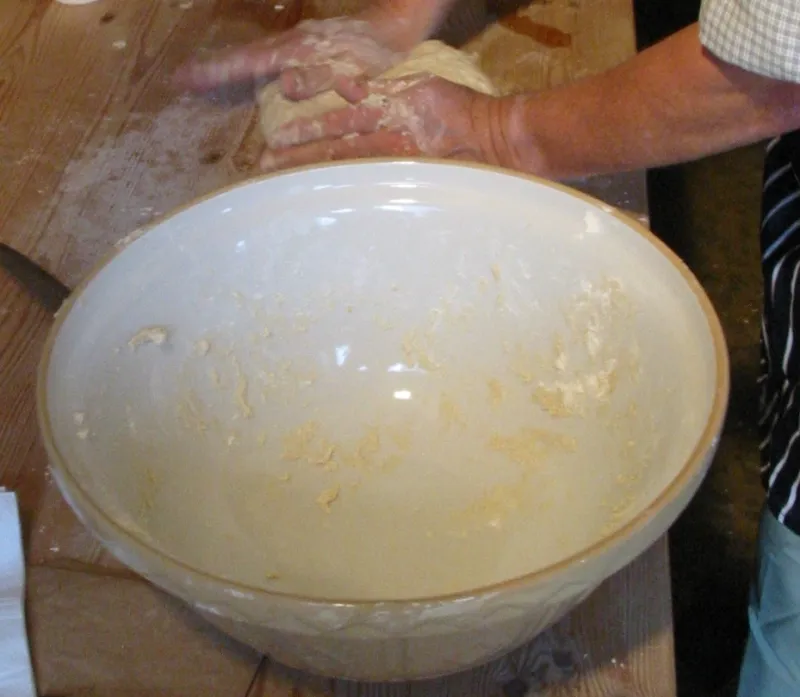
Photo: Man vyi, Public domain, via Wikimedia Commons
There's a moment when a hobby dies and nobody announces it.
It happens a few weeks in — watercolor, sourdough, birdwatching, whatever it is — when you catch yourself mid-stroke thinking: this could be a series. A little content pillar. A way to diversify.
The flip is subtle. You're not cynically scheming. The light is good and the camera is right there, and then you spend the next hour thinking about the caption instead of the thing in front of you.
I've watched this happen to candle-making. To running. To a friend's very sincere attempt to learn the banjo. The activity didn't get worse. The relationship to it did.
What conversion culture does to joy
The creator economy has one core move: convert. Attention into audience, audience into income, hobby into vertical, affection into a funnel.
On its own, that's not a crime. It's how a lot of us pay rent, and I'm not going to pretend I'm above it.
But when conversion is the only setting, everything becomes inventory. Nothing is allowed to be just yours. And the weird consequence is that you start doing things worse, because you start doing them for the part that can be shown.
There's a specific freedom in doing something badly with no witness. It's the only place where you can actually be a beginner — which is the only place where learning actually happens.
Three rules for the private thing
I keep it simple.
Badly, on purpose. If it turns out good, great, but that isn't the assignment.
Privately. No posting. No documenting. No group-chat updates with the photos.
No audience. Not even a small one. Not even your mother, who would absolutely love it.
The point isn't purity. The point is that the absence of an audience changes what you're willing to try — and what you're willing to do badly is where all the actual growth lives.
How to protect it in practice
A few things that have worked for me, and for people I know who guard their private hours like a grudge:
Leave the phone in another room. Not face down. Another room. The camera is the gateway drug of the content reflex.
Buy the cheap supplies. Cheapest version of everything. Nothing kills a private hobby faster than a two-hundred-dollar investment that now has to justify itself.
Don't put it on a calendar. Consistency is for the work you get paid for. This gets to be seasonal, sporadic, and abandoned for three months at a time.
Don't name it. The second you call it "my practice," a small piece of it becomes brand-adjacent, and it starts auditioning.
Tell one person, maximum, and tell them you don't want to talk about it.
And the hardest one: let it be bad for years. Let it be the thing you never get impressive at. Some lives are genuinely improved by never being publicly good at anything again.
What it gives back to the paid work
Here's the part I didn't expect. The private thing makes the public work better — not in a cross-pollination, repurpose-it-later way. In a chemical way.
Because your paid work now has somewhere to rest. The part of you that needs to be seen is busy being seen. The part that needs to be curious is off in the corner being terrible at something. Both get fed. Neither gets consumed.
You come back to the actual job with a fuller tank and fewer opinions about yourself, which honestly is the whole ballgame.
The quiet reward
Sometimes I think the most radical thing a creative person can do right now is have an hour a week that produces nothing extractable. No footage, no notes app, no before-and-after. Just a person being mediocre at a thing in a room.
You don't need a following for your sourdough. You don't need to tell anyone about the bird list. You don't need to turn your one uncategorized hour into a pillar.
Keep one thing that pays you in nothing but the doing of it. Your other work will thank you. You might get a life out of it, too.